Archives for

Merlot

Sipping something Un4Seen

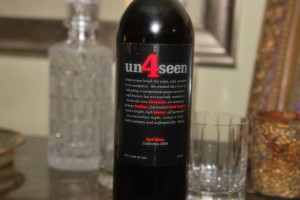
Un4Seen Red Blend

Un4Seen Red Blend

Sometimes the adage “You get what you pay for” doesn’t necessarily hold true. Sometimes, you get less, but every now and then, you get more. That was the case with a sample of Un4Seen Red Wine I received recently. And while I didn’t actually spend the $10, I’d do so in a second!

With it’s hokey little name and it’s cute little label, I really didn’t expect much from this wine. However, what was in the bottle really impressed me, especially since I hadn’t heard of the ‘new’ winery from Lodi, or the people making it. I did a little research, however, and found out who I think is behind the wine. The folks at Lange Twins winery. I mean, can it be a coincidence that the 2008 vintage was done by Chief Winemaker David Akiyoshi and the 2009 vintage by winemaker Karen Birmingham, both part of the Lange Twins Team? Anyway, I digress.

What strikes you first about the wine is the blend of grapes used to make it. Clearly listed in red on the label, Un4seen is a blend of Zinfandel, Malbec, Merlot and Petit Verdot, not necessarily four grapes you’d expect to find in one bottle. The grapes all come from Lodi and Clarksburg, California. The 2009 vintage sees the four different grapes fermented separately, then blended to create the wine in the bottle. Each of the grapes can stand on it’s own, and what happened when they came together was interesting.

Right out of the bottle, with no air, there were restrained red cherries with some leather on the nose. The palate is a dark red fruit, cherries and maybe raspberries. There’s an earthy element and light leather as well, with a slight tart finish, but I enjoy it. The tannins are soft, and it’s an easy drinking wine with some decent complexity. However, after 30 or so minutes, and pairing with a perfectly grilled steak, this wine began to shine.

Suddenly, adding some beef to the equation allowed really nice fruit comes out of the glass. The notes from the wine vacillated back and forth, with a very fruit forward stance with a midpalate of black pepper. The Zinfandel definitely takes center state, with tremendous ripe, red berries. However, the mid palate and finish shows the malbec and merlot, with an earthy finish. From sip to sip, those flavors would show themselves, each battling for center stage, but in a fun, playful way.

For $10, I didn’t expect this wine to rock my socks off. However, it definitely brought some more to the table, or wine glass, than I expected. Worth the money, and then some. Throw a nice steak at it, and you’ll be pleasantly surprised at how good $10 can taste.

What is your favorite $10 and under wine?

Backsberg Wines Kosher For Passover or Anytime

Happy Passover

Happy Passover

For years my Jewish friends have been conditioned to drink the “foxy” concord grape wine pumped out by the Manischewitz company during the holidays. During a recent CBS12 WPEC TV segment, while bringing some well made wine for Passover Seder to your attention, anchor Ben Becker asks “Why no love for Manischewitz”? Drink it if you like, but I’m here to offer freedom from the slavery to  high octane grape juice with two more Kosher for Passover wine selections.

I recently received samples from Backsberg Estate Cellars , which was founded by  family of Jewish refugees from Lithuania in 1916. Backsberg is located in Paarl, a town in the Western Cape province of South Africa. Today, the Back family owns 110 hectares of vineyards located at the slopes of the Simsonsberg Mountains. These vineyards are dedicated to the production of their traditional line, as well as the kosher wine line. Both of the wines below are 100% Kosher Mevushal (pasteurized) and are made under the certifications of the Cape Town Beth Din and OU (Orthodox Union) of the United States.

Backsberg has become the first wine producer in South Africa and one of only three in the world to gain Carbon Neutral status using carbon sequestration. Carbon sequestration is a process of removing carbon from the atmosphere and depositing it in a reservoir. The Back family is committed to preserving the environment through tree planting, conversion to bio fuel, and other initiatives including lighter weight bottles. They are not only stewards of the land, doing their part to ensure the next generation can enjoy the land, they are also humanitarians. In the wake of recent natural disasters they are participating in a program called ShelterBox, which provides emergency supplies and tents to people in need. A good family making good wine.

Backsberg 2010 Chardonnay Kosher for Passover

Backsberg 2010 Chardonnay

The first selection is the Backsberg Kosher Chardonnay 2010. This wine definitely benefited from some aeration and time to open. As soon as it was uncorked, the nose was buttered popcorn. However, after just a few minutes of swirling and aerating, nice tropical notes developed on the nose. The palate was crisp, with great fruit. Pears on the attack, and a mid palate that was a little buttery and a finish that was a bit spicy and toasty.  It has a short finish, but some residual spice lingers. Interestingly, there is no oak on this wine, so the spice and toasty notes are a characteristic of the grape and where they were grown, rather than the barrel process.  Again, with time to open, more tropical notes came through on the palate, and for $14 I would recommend the Backsberg Kosher Chardonnay 2010 for any time, regardless of religious persuasion.

Backsberg 2008 Merlot is a great wine for Passover or anytime

Backsberg 2008 Merlot

For a red wine option the Backsberg Kosher Merlot 2008 is right on the money. Again, for just $14, this wine is perfect for anyone, anytime, kosher or not. The bouquet was rather tight, showing a little dark fruit. The palate showed restrained black fruit up front, with a nice mid-palate transition to a finish of woody smoke and some pepper spice. The wine has nice integrated tannin, not overly dry, this will rock with your brisket, lamb shank, or any other roasted meat meal.

Backsberg has a large line of wines, and I’d love to hear if you’ve had any of them. Kosher or not, Backsberg should find it’s way into your glass.

Are box wines really that bad?

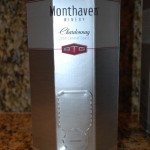
Monthaven Winery Chardonnay Boxed Wine

Monthaven Winery Chardonnay Boxed Wine

Years of poor quality wine in cardboard boxes have made even the most frugal wine shopper pass them by. However, recent quality improvements as well as a focus on “greener” delivery methods have brought the box back to bearable. With Memorial Day just a few weeks away, in the short video below, I bring four options to CBS12 and chat with Kara Kostanich about them.

What’s good about boxed wine?

  • Boxed wines are affordable. They typically come in boxes that hold three liters, or the equivalent of four regular 750 ml bottles of wine.  You usually pay 1/2 to 2/3 price of the four bottles.
  • Box wines last longer after opening. Boxed wines typically last about four to six weeks after opening, allowing you to not worry about spoilage if you are just pouring one glass from a bottle.
  • Box wines are more eco-friendly. The packaging for boxed wines is not only cheaper than the packaging for the equivalent four bottles, it’s also lighter. That allows delivery to be more “green”, using less carbon emissions to transport them.

What’s Bad About Boxed Wine

  • The quality is still low. While the wines I brought to the show are fine for drinking, they won’t win any awards.  They are definitely steps in the right direction, but for me, they’ll be relegated for big parties where the budget is the focus.
  • They have a shorter shelf life than bottles. Talking with a number of retailers, they all agree that boxes don’t last more than six months. The new Octavin wines, such as the Monthaven in the video, say they last over a year. I’ve not put that to the test, yet.
  • They are a bit more difficult to keep at serving temperature. The producers of Monthaven say the reds should be served at 57 degrees, the whites about 50. That means having them outside in the summer time requires some thought as to how you’ll keep them cool. Ice may cause the cardboard to soften and break, and you’ll have basically a plastic bag in the ice chest.

In the video I talk about

  • How to store boxed wine
  • How to serve boxed wine
  • A bit about how the wines taste
  • The prices of the box wines we tried

My next post will talk about each of the wines in a little more detail. Be sure to come back and see what I have to say about the Double Dog Dare and Monthaven box wines, which were purchased from Total Wine and More here in Florida..

Wine Review – CMS Red

CMS Bottle

It’s been too long. Not since I’ve had wine, but since I wrote and shared about it. I have wine JUST about every night. Often times I am so wrapped up in enjoying it, that I forget to write down my notes. I decided not to do that today.

After a fabulous day at the beach, SANS BEERS, we came home to relax. After a quick nap, I decided to take The J to see Speed Racer. I had *NO* desire, but I took him anyway. Well, after less than an hour he decided he was scared and wanted to go. We came home and Robin knew how to make it all better. Robin had half a glass of the red from last night left over, and she wanted some more to sip on before dinner. CMS got the call up. It was time for The Show. She laid out some Brie and french bread, and I cracked a bottle of CMS Red. The J didn’t partake, but I did make a J-Tini out of Sprite and “Cherry Syrup”.