Archives for

cabernet sauvignon

Sipping Stepping Stone Cabernet Sauvignon 2008

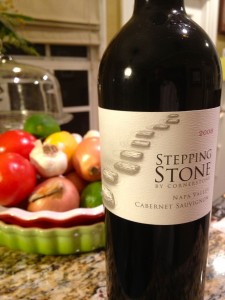
Stepping Stone 2008 Cabernet Sauvignon Wine

Stepping Stone 2008 Cabernet Sauvignon Wine

When people talk about Napa Valley wines, especially Cabernet Sauvignon, they often talk about lofty prices of hard to get wines like Screaming Eagle and Scarecrow. And while there are definitely great wines at lower prices in Napa, California, like Hartwell which can come in around $80, that is still above some people’s wine budget. That’s when a wine like the Stepping Stone 2008 Cabernet Sauvignon fits perfectly in your glass. It’s a great expression of Napa Cabernet Sauvignon, at a price that doesn’t make you feel like you just bought a whole vineyard.

Stepping Stone is the sister label to Cornerstone Cellars, a venture with managing partner Craig Camp and Drs. Michael Dragutsky and David Sloas who started the label in 1991. I had the chance to try the Cornerstone Cellars 2004 Howell Mountain Cab Sauv a year or so back. While I didn’t write up a review, I thought it was delicious, and I was quite sad I opened it when I did. I felt it could have aged for another 2-3 years, if not 10. So, when I was given a shot to try the 2008 Stepping Stone Cab Sauv, bottled in May 2010 after spending 18 months in 50% new French oak barrels and released 9 months after bottling in early 2011, I was quite excited. At just $35 a bottle, I believed we’d have a great Napa wine under $40 to talk about.

Get a Wine Decanter

Get a Wine Decanter

First, a word about decanting, or just aerating wine. Do it. Stop being so impatient. It’s not rocket science, and will improve the taste of just about any red, and even some white wines you’ll drink.  If you don’t have a formal decanter, which my God, if you’re a regular wine drinker, get one, then just pop the cork, and pour out a smidge of wine into a glass. That will allow air to get into the neck of the bottle and start oxidizing the wine. I won’t get into why decanting works, just know you should. Some wines need more air than others to “open up”, and that part sort of IS rocket science. Just know that 10-20 minutes sitting and breathing is almost always the right thing to do.

Tasting the Stepping Stone 2008 Cabernet Sauvignon, the nose was a sweet cherry, with some notes of blueberry and brambles. Yes, I taste with my nose first. Some 80% of what things taste like are based on smell, so taking a nice sniff of the wine will start producing taste patterns. The palate was big fruit up front, dark cherry and blueberry, followed by a nice earthiness. I let this decant for about an hour after my initial taste. I noticed the mouthfeel was full but silky, round flavors of dark cherry, mocha and a beautiful herb and forest floor note. There were fine, well integrated tannin, and this wine was just a pleasure to sip. Even at 14.9% ABV, there was no heat on the finish, and it was a well made wine. At $35, I’d say it was worth every penny. Tim Lemke of Cheap Wine Ratings wrote up a number of the Stepping Stone wines, and agrees the Cabernet Sauvignon is a good wine.

Cabot Coop Private Stock Cheddar and wine

Cabot Coop Private Stock Cheddar and wine

Food pairings for this Cabernet Sauvignon would be the typical red meat such as steaks, as well as lamb or veal. We enjoyed it with some amazing Cabot Coop Cheddar cheese, and think it’s a perfect pairing. The two dance together in a delicious harmony. The Stepping Stones 2008 Cabernet Sauvignon is a great wine on it’s own however, and you can enjoy it just sipping on a glass with friends. I know I did.


The un-retiring of Bernard Portet

Bernard Portet Heritance Wines

Bernard Portet Heritance Wines

When I was asked if I wanted to meet Bernard Portet for lunch, I immediately hit the internet. Didn’t the 30+ year Clos du Val veteran retire from the business? Why would they want me  to meet with someone spending his days playing cards or shuffle board, wine industry veteran or not? The first result when searching for “Bernard Portet” brought up a July 2011 Napa Register article about his retirement barely lasting a year, and his being involved in a new venture, Heritance wines. I jumped at the chance to meet Bernard, and taste his wines, even if I wasn’t getting a “scoop” story.

I met Bernard at Tryst, a trendy downtown Delray Beach, FL restaurant for lunch. As I walked in, Bernard stood, warmly welcoming me to the table. We sat, along with Tryst owner Butch Johnson, and chatted about the Heritance Wines endeavor. After only a year of retirement, Bernard quickly grew antsy when he saw grapes on the vine during 2010′s harvest, and realized none of that would be wine that bore his signature. He soon formed a venture with Don Chase, named Polaris Wines, and began buying juice he had been fond of from the 2008 vintage. Bernard Portet uses assemblage winemaking for Heritance as it has long been his signature style, where he blends different lots of wine to craft a finished wine that is greater than the sum of their parts. Bernard began his masterful blending, and we were soon given Heritance Sauvignon Blanc and Heritance Cabernet Sauvignon, two wines made in the old world style of Bernard’s native France, heralding from Napa.

Bernard said the intent of Heritance wines was originally to be a negociant, buying juice from vintners and blending and bottling himself. However, that plan changed when the wine glut of 2008 and prior dried up. Bernard said the difficult 2009 and even worse 2010 vintages had caused there to be less available wine for Bernard to purchase and blend.  This forced him to change his business plan, purchasing grapes and blending at a custom crush facility. Heritance would not give up the mission of bringing good wine to market, and quickly began sourcing grapes in Napa to continue their project.

Our discussion lead to the styles of wine we often see out of Napa today. We discussed, and all agreed that the age of big, over the top wines may be coming to the close. Bernard feels that the pendulum has swing to it’s furthest point, and is starting to swing back towards more reserved, balanced and elegant wines. Indeed, Bernard found himself wanting to make wines that were closer to his French roots, balanced between fruit, earth and acidity, and crafted with food in mind. With that, we ordered lunch and began to taste the wine.

Heritance Sauvignon Blanc 2010 review

Heritance Sauvignon Blanc 2010

First we tasted the 2010 Heritance sauvignon blanc, a blend of 91% sauvignon blanc and 9% semillion. The nose was full of fresh melon, with faint notes of citrus. The palate was soft and fresh tropical fruit, with a round mouth feel. As the wine opened, citrus notes of lime and lemon developed, and a light herbal note permeated the glass. The Heritance sauvignon blanc had crisp but not bracing acidity, and additional spice notes developed over time. It’s aged and fermented in 100% stainless steel, and has 13.5% ABV. With only 2,000 cases available, it won’t be around long. This white wine had good depth and balance, making it a great $18 white wine, good on it’s own or with food.

I had ordered the fish tacos from Tryst’s lunch menu, and was very glad. Fresh fish, with great taco seasoning, made a great pairing for the sauvignon blanc. The citrus notes balanced the heat of the taco seasoning, while the spice from the wine managed to keep the flavors lingering. I also thought the fish taco would pair nicely with the Heritance cabernet sauvignon, and I was right.

Review heritance cabernet sauvignon 2008

Heritance cabernet sauvignon 2008

The Heritance Cabernet Sauvignon 2008 is a great under $30 Napa cab. A bouquet of dark cherry and spice box waft from the glass. The palate has beautiful fruit, black cherry and blackberry mix harmoniously with a mid-palate of earthy leather. This old world leather transitions into a finish of cedar and soft spice while holding on to the fruit. The finish absolutely kicks on this red wine, bold and prominent but not overpowering. At just 13.8% ABV, the Heritance Cabernet Sauvginon 2008 is a blend of 92% cabernet sauvignon and 8% merlot, and was aged in a mixture of new and used medium-toast French oak barrels. With only 3,000 cases made, you’ll find Heritance cabernet sauvignon mainly in restaurants on their website online.

The fish taco paired nicely with the Heritance cabernet sauvignon. The spice from the wine pumped the spice from the taco, while the dark Mexican seasonings worked nicely with the black fruit. However, I think this wine would prefer beef roasted or grilled, as well as lamb, or veal.

Bernard has no plans of stopping with just the two wines currently in his portfolio. There are plans to bring another red wine to market shortly, and while I can’t mention what it is, I look forward to this South American gem gracing my glass and palate soon. Additional plans are in the work to expand past that and I look forward to seeing what the future holds for Bernard Portet, Heritance and his wines.

Wine and Chocolate for Valentines Day

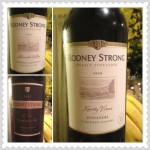
Rodney Strong red wines

Rodney Strong red wines

With Valentine’s Day approaching, wine and chocolate will be bought and consumed in astounding numbers. About 58 million pounds of chocolate will be purchased, and I’m sure more than a few bottles of wine will wash that down. For the past 23 years, the Rodney Strong Wine & Chocolate Fantasy event has paired wines with gourmet chocolate, inviting guests to revel in the sensory delight. The Rodney Strong twitter team asked if I’d participate in a Twitter Tastelive event, pairing three of their red wines with chocolate, and tweeting about it. I admitted that my personal palate preferred food to sweets when pairing wines, but I’d love to challenge my palate.

Rodney Strong 2009 Knitty Vines Zinfandel

Rodney Strong 2009 Knitty Vines Zinfandel

First we taste the Rodney Strong Knotty Vines 2009 Zinfandel, as well as paired it with some grilled hamburgers. Spending 16 months in a mixture of French and American oak barrels, this $18.50 zinfandel displays a bouquet of red berries such as red raspberry and even dark cherry, while the palate offers bright red berry fruit, raspberry on the front, with the flavor getting darker on the mid palate and the finish. There are notes of black pepper on the back end, and the wine has good California fruit, and is big and powerful without being overblown. It’s a perfect wine for a bbq, whether ribs or burgers, and we had to struggle not to finish it with our meal, for the upcoming chocolate tasting.

Rodney Strong Alexander Valley 2009 Cabernet Sauvignon

Rodney Strong Alexander Valley 2009 Cabernet Sauvignon

Next we taste the Rodney Strong Alexander Valley 2009 cabernet sauvignon, a $25 bottle of California wine. A full bodied red, the nose shows fresh dark cherry, ceder and baking spice. The palate opens nicely, showing more fruit than wood and spice, while retaining a nice firm tannin structure. With the burger, the California fruitiness of this wine tones down, and the earthy leather notes really show through on the mid and finish. It works nicely with or without food, and I was able to enjoy a glass up to three days after it was opened. It retained it’s fruitiness, while still having integrated tannins lending body to the wine.

Rodney Strong 2007 A True Gentleman's Port

Rodney Strong 2007 A True Gentleman’s Port

Finally we taste Rodney Strong 2007 A True Gentleman’s Port, from Sonoma County. A blend of 39% zinfandel, 30% touriga, 16% malbec, and 15% syrah, this wine is aged 40 months in neutral oak, after being fermented on the skins. This is a very limited release wine, available only to the winery’s Collector’s Circle members and at the winery itself. Without the benefit of air, the nose was hot and spicy, and the palate had a tremendous amount of power behind it, with plum, raisin and spice notes. However, on the second day, the Rodney Strong A True Gentleman’s Port opened to a big, full, round and silky palate, with flavors of dark chocolate, raisin, plum and fig.  There was fine spice on the finish, and it lingers quite a while.  The nose on the third day is dominated by chocolate, and the palate is even rounder, softer, more integrated, like a plum and raisin dark chocolate bar, instead of individual notes. For $30, it’s a very nice way to end a meal.

Dark Chocolate to taste with wine

Dark Chocolate to taste with wine

Now that we’ve taste the wines, how does the chocolate factor in? First, we had five different chocolates to try, including some 72% cocoa bits from Peters’ Chocolates from Sebastopol, CA, as well as 55%, 61% and 72% cocoa dark chocolate from Chocolate By Numbers. I also added a little Brix chocolate later on, which is supposidly chocolate made especially to pair with wine. We’ll cover that after the cover the first four chocolates.

Frankly, I’m still not a dark chocolate fan, and still don’t like chocolate with my wines. I found pairing 72% dark chocolate from Peters’ Chocolates with the Rodney Strong Port was my favorite pairing of the night.  The wine took some of the heat out of the finish, and brought out the chocolate notes in the wine, of course. However, there were tons of oohs and ahhs about the pairings, with other wine writers loving the different wines with different levels of cocoa. Everyone’s palate is different, and there are different sensitivities to sweet, salty, and sour. So don’t let my preferences influence yours too much. You can try some Rodney Strong wines and chocolate and attend the Wine & Chocolate event Feb 4, 2012 at the winery, and form your own opinion.

Brix 54% Cacao Dark Chocolate

Brix 54% Cacao Dark Chocolate

Back to the Brix Chocolate. The Brix was 54% cacoa and surprised me in terms of taste, in a positive way. Supposedly made with pairing wine in mind, Brix chocolate claims to pair well with Champagne, Riesling, Pinot Noir and Vintage port. At $10 for 8 ounces, it’s about double the price of a bag of Dove chocolate, which you can get in the grocery store. While I felt it was pretty good chocolate, and I felt it paired really well it with port, I’d have a hard time recommending you buy it just because it pairs with wine.  I’ve not paired it with anything other than port, and have a bottle of Prosecco that I’ll try it with later this week!

What are your thoughts on chocolate and wine? Do you love it? Do you hate it? Do you want to try it? Let me know your thoughts, leave a comment below!


All of these wines, and chocolates, were provided as samples to taste and discuss honestly with you. Nothing affects my opinion of the wines or products I write about, not even getting them as free samples.

Pairing wine with Easter and Passover meals

wine to pair with easter or passover dinner

Happy Holiday

Easter and Passover are on their way, and that means family will be getting together to celebrate the holidays. Whether your family has a tried and true menu, or likes to change it up year after year, having the right wine on the table makes everything better. Recently, I brought four wines to the CBS12 WPEC station as recommendations for your holiday celebrations.

The segment starts with two kosher for Passover wines. There is not a tremendous difference between kosher wine and non kosher wine. In general, because kosher wine is used in the Sabbath blessing, as well as holidays, it can only be handled by Sabbath observant Jews. Additionally, no animal products can be used in the winemaking process, such as gelatin or egg whites to fine the wine (remove particulates). The difference in Kosher for Passover versus Kosher wine is that they make sure no grain yeasts are used, since during Passover Jews do not eat any grains (no bread, for example). That’s it, otherwise, it’s fermented grape juice, just like any other wine. I’ve discussed kosher Chardonnay previously, and compared to a non-kosher chardonnay.


Click above to watch Matthew Horbund talk Kosher for Passover and Easter wines on CBS12 WPEC

The first wine in the TV segment above was Hagafen 2008 Chardonnay from the Oak Knoll District of Napa, California. This wine retails for $20, and is a nice Napa Valley chardonnay at this price. Irit and Ernie Weir founded the winery in 1979 with their inaugural vintage in 1980. With a total production of only 8,000 cases annually, they produce small batches of various wines including merlot, cabernet sauvignon, zinfandel, chardonnay, and riesling. Their wines are well made, and for this segment I tasted the merlot, cabernet and chardonnay. I selected the chardonnay as I thought it offered a nice rich and full mouth feel, having good pear fruit with the toasty spice from the oak aging. This wine sees malolactic fermentation, which gives it that rich mouth feel, often associated with a buttery quality, and a little oak which gives it the buttery taste, as well as a little spice. This wine will pair well with the appetizers, as well as any lighter fare served at the Seder such as chicken. For the record, the name is pronounced Ha-Ga-Fen, not Hag-a-fen as I said in the above TV spot. Clearly, my Hebrew needs as much work as my French and Italian. In the Hebrew prayer over grape juice or grape wine, the ending words “p’ri hagafen” translates to Fruit of the Vine.

Hagafen 2008 Chardonnay perfect for Passover Seder

Hagafen 2008 Chardonnay

For a red wine option, I selected the Baron Herzog 2007 Cabernet Sauvignon from Central Coast, California. The Herzog family has a long history of wine making, dating back to Philip Herzog making wine for the Austro-Hungary court more than 100 years ago. Emperor Franz Josef enjoyed the wines so much, he made Philip a Baron! During World War II, Philips grandson Eugene hid the family from the Nazis by moving them around the Slovenian countryside, and at the end of the war came out from a false wall in a friends shed to reclaim his family’s winery. Three years later they were driven from their home, and in 1948 arrived in New York. Eugene toiled in a small store front making kosher wine from Concord grapes, and instead of being paid for some of his work, was given shares in the company. All of the other owners eventually gave up their shares, and  in 1958 he became the sole shareholder. They renamed the company Royal Wines in deference to grandfather Philip, and turned the company into a success. They moved out to California, expanding in 1985, with a focus on making high end quality wine under two labels, Baron Herzog and Herzog Wine cellars.

baron herzog cabernet sauvignon for passover seder

Baron Herzog cabernet sauvignon

The Baron Herzog 2007 Cabernet Sauvignon is made mostly from grapes sourced from the Paso Robles wine region. It’s aged 18 months in stainless steel, which helps retain the fruit notes. The nose of the wine has bright raspberry and red fruits, which soften as it opens up. This is a very California wine, showing more fruit than earthy or leathery notes. While a tad dry and mild tannins, the round fresh fruit translates from the nose to the palate. It will pair nicely with your Passover Seder meal, whether that includes brisket, lamb shank, or some other roasted dish. For $13, it’s a nice California Cabernet, Kosher for Passover or not.

There were plenty of other Kosher for Passover wines I could have selected. I tasted the Ben Ami Chardonnay and Merlot, and while both were a bit on the lighter and easy drinking side, they’d make a fine showing at your Passover dinner. I also tried the Hagafen Merlot and Cabernet Sauvignon, which showed a bit more earthy and leather notes on the palate than the Baron Herzog. Any would make a fine showing at your meal. While selecting a Kosher for Passover wine requires a little work, visiting Total Wine will help make that work a bit easier. They’ve got a tremendous selection of Kosher wines, including other US made wines as well as Israel made wines. They’ve also plenty of wines to select for Easter. Selecting a wine for Easter isn’t as restrictive as Passover, so the field is wide open. For Easter, I selected two Argentinian wines for the TV segment, and think for the price, they offer great quality, though they aren’t Kosher for Passover.

Don David Torrontes a great white wine for Easter

Don David Torrontes

With about 1,500 acres of vineyards  5,500 feet above sea level, the Michel Torino Estate is a key player in the Cafayate Valley of Argentina. The winery was founded in 1892 by brothers Salvador and David Michel, and they produce a wide variety of wines from a malbec rose to cabernet sauvignion to pinot noir and more. In the TV segment, select the Don David Torrontes Reserve 2009 as a great white wine for Easter, and for $16, it’s great any time. The nose of this wine is absolutely beautiful, with soft white flowers and a slight melon note.  The palate shows some citrus and melon, and is light and quite delicious. It will pair well with chicken, sea food and shellfish, and as I mention in the segment, Thai food.

Don David Malbec perfect for your easter meal

Don David Malbec

As a red wine for Easter, I believe the Don David Mabec Reseve 2008 will be a fantastic wine selection. Malbec is a versatile wine, and it pairs well with beef or lamb prepared almost any way, as well as ham, which covers most of the meats at traditional Easter meals. Without any decanting this wine has a palate of simple red fruit, with restrained earthy notes. As it opens, the palate is powerful fruit of red cherries and a little chocolate, and shows definitely a bit more new world with it’s round flavor profile. The more this wine opens, the more dark the fruit gets, and the more complexities come out. With a price of about $15, it’s not only worth making an appearance on your Easter table, it may be the best value wine you can get for the holiday!

Of course, everyone is looking for the best wine for Easter, and Passover, and I’ve given just a few selections here. I’ll come back in a few days to offer some more Easter wine pairings, but I’d love to hear what you plan on serving this holiday season. Easter or Passover, what’s in your glass?

Drinking for a good cause – Charity Case Rose

Charity Case 2008 Rose Wine

Charity Case 2008 Rose Wine

It’s always exciting when you can take what you love doing, and find a way to do good things with it. That’s exactly what the team at Charity Case Wines has done. Jayson Woodbridge, of Layer Cake and Hundred Acre, has lent his name to the project, teaming with vineyards and wineries around Napa, and together create budget friendly wines with a good cause.

Taking grapes donated from Napa vineyards, Charity Case created a rose wine out of mostly cabernet sauvignon, along with zinfandel, merlot and syrah. In 2008, about 305 cases were made, and about 2,000 cases in 2009, a very generous year. The 2010 vintage will see about 300 cases again, as obviously the yields and market will dictate how much participating vineyards can offer.

All of the proceeds from sales of the Charity Case wine go towards those in need at several charities, including Aldea Children & Family Services, Cope Family Center, Foster Kids Receiving Center and Wolfe Center Teen Drug & Alcohol Treatment program. That alone is a good reason to buy some Charity Case Rose and drink the wine.

I’ve long been a fan of rose wines, it was the topic of one of my early television segments on Daytime. I love the refreshing flavors that rose wine can offer, especially on a hot summer day. At $12 per bottle, the Charity Case Rose 2008 was an easy drinking wine. It had some red fruit on the nose and palate, though there was no acidity to balance that out on the finish. It was a simple, straightforward wine, easy to sip on. Notes from the winemaker indicated that 2008 was a very rainy year, and that caused the fruit not to be super concentrated, thus offering this style of wine.

Pairing sweet smoked ribs with rose wine

Pairing sweet smoked ribs with rose wine

I’m curious to follow Charity Case through 2009 and 2010, to see how, if at all, the wines change. I would love to see some brighter fruit and some more acidity on the finish, to help the wine pair better with foods. It couldn’t stand up to my smoked ribs, as the sweet and savory sauce overpowered the wine. The Charity Case Rose did, however, pair nicely with cheddar and manchego cheeses on the second day, and I would pair it with cheese and fruit next time.

Some fellow wine writers had some great things to say about Charity Case Rose. Dan, The Iowa Wino thought the Charity Case 2008 Rose was outstanding. The La Jolla Mom picked it as her 3rd favorite out of 12 rose wines. The Miami Wine Guide liked it as well. I’d love to hear your thoughts! What do you think about Charity Case wines, or rose in general?


St Patrick’s Day – It’s not just for beer anymore

Irish Clover for St Patrick's Day

Happy St Patrick’s Day

Though St. Patrick’s Day is a religious celebration, enjoying a drink has long been a part of that celebration. And while it’s customary to have a beer or cocktail on St Patrick’s Day, enjoying a glass of wine is certainly an option. To put together a food and wine pairing piece,  I asked an Irish friend what she would eat on St Patrick’s Day. With Irish Eyes Smiling, she said “Mum would fix corned beef and cabbage, Irish lamb stew, and bread pudding.” I took Mum’s menu, and went to pairing wines perfect for Irish food and St Patrick’s Day.

Since I didn’t have Mum here to cook for me, and I was short on time to create the dishes myself, I went over to Oshea’s Irish Pub on Clematis Street in West Palm Beach. It’s been recommended for it’s food before, and it’s  menu was just what I was looking for. I picked up two main dishes, as they didn’t have bread pudding, and scurried home.  The food was still hot when we plated it, which wasn’t surprising since I live only 2 miles away. We started with the corned beef and cabbage.

Corned Beef and Cabbage for St Patrick's Day

Corned Beef and Cabbage for St Patrick’s Day

Valckenberg Madonna Riesling Kabinett 2009

Valckenberg Madonna Riesling Kabinett 2009

The briny flavors of the corned beef and cabbage worked very nicely with the German wine I selected. I wanted one with a little sweetness, and the Valckenberg Madonna Kabinett 2009 was perfect. From the Rheinhessen, the largest German wine region in both area and production, the Madonna is a blend of the grapes riesling, Müller-Thurgau, Silvaner and Kerner.  The bouquet on the Valckenberg Madonna  initially was tight, though it opened to a sweet, fruity bouquet. The palate was delicious ripe honeydew melon, with just a touch of acidity. The wine paired perfectly with the corned beef and cabbage, and for about $12.00 it’s a nice value.

Your St Patrick’s Day party may not consist of corned beef and cabbage. Or, white wine may not be your preference, and you’d like an alternative idea for your festival. I’d highly recommend finding a recipe for Irish Lamb Stew, or a Irish Beef Stew if you prefer. And then I’d recommend pairing it with a delicious Cabernet Sauvignon.

Irish Beef Stew from OSheas for St Patrick's Day

Irish Beef Stew from OSheas for St Patrick’s Day

Frank Family Vineyards Cabernet Sauvignon 2007

Frank Family Vineyards Cabernet Sauvignon 2007

Frank Family Vineyards has a history dating back to 1884 in Napa Valley, California. They produce a wide variety of wines, from Zinfandel to a Sparkling Rouge, and their Cabernet Sauvignon. The Frank Family Napa Valley Cabernet Sauvignon 2007 is a big Napa Cab. Right out of the bottle, the nose of the Frank Family Cabernet was tart cherries with notes of spice and leather. The palate was silky, with nice fruit and firm tannins, showing the tart cherry all over the palate. After about about 30 minutes decanting, the nose is more a stewed cherry and baking spice, with blackberry and bramble notes.  The palate was a full, rich red berry with warming spice. There was a green note as well, such as bell pepper, but it was a undercurrent and not a prominent taste.

However, the wine really shined when it was paired with food. With each bite of the stew, the wine took on this soft, silky approach and gained complexity. The fruit was less tart, and took on a black cherry note with cocoa flavors and warm baking spice. The wine spends 24 months in french oak, about 35% new, the remainder 1 and 2 years old. The oak is well integrated, though the tannin is firm as I said. You can order the wine from the Frank Family website as well as select stores, and it comes in at $45 from the winery, though you can find it for less shopping online.

If you want to skip the main course and head right to dessert, I have some great options for you. Rich and heavy, bread pudding is not only perfect St Patrick’s Day dessert, it’s delicious. It can be served hot, or cold, and with any number of toppings from whipped cream to a bourbon sauce. We served it cold, and paired it with an Italian white wine that can only be described as beautiful. The Saracco Moscao d’Asti is an amazing wine on it’s own, and really harmonized with the bread pudding.

Bread Pudding for dessert on St Patrick's Day

Bread Pudding for dessert on St Patrick’s Day

Saracco Moscato d'Asti

Saracco Moscato d’Asti

Moscato is all the rage now, being one of the trendy wines that people ask for in restaurants, clubs, and of course, wine shops. I don’t reach for Moscato often, as many expressions are just a bit too sweet and syrupy for me. However, the Saracco Moscato d’Asti is fantastic. The wine in the glass is a beautiful light yellow hue, and you’ll immediately notice it’s slightly frizzanti, or sparkling.  The nose is a wonderful white floral and peach bouquet, and it’s just gorgeous. The palate opens up with a sweet floral and apricot or peach note, and I can only describe it as delicious, refreshing, and sweet without being sugary. You can find it for around $16, and it’s worth buying! I’d serve this alone as an aperitif, or with dessert, or to sip on during a lovely evening with friends.

I’d love to hear how you celebrate St Patrick’s Day!

Valentine’s Day Wines Made Easy

Wine for a Happy Valentine's Day

Happy Valentine’s Day

Everyone likes options. While I tossed out a few great picks in my latest CBS Segment on Valentine’s Day and Superbowl Wines, some friends asked for a few more selections. Of course, there are hundreds, if not thousands, of perfect wines for the day of love. However, these are a few wines that I’ve sipped in the past few months that will work well for most of your Valentine’s Day needs.

Whether starting your night with a sparkling wine or pairing a Champagne with your meal, I’ve got three selections that I absolutely love. The first two are under $20 and widely available, and hail from the Alsace. Domaine Lucien Albrecht is one of the oldest leading Alsace family owned estates, tracing its roots back to 1425. The Albrecht Brut and Albrecht Brut Rose are two lovely sparklers from France, the Brut crisp with tart apples, the Brut Rose has notes of plums and tart cherries. Both of these sparklers make a great aperitif, and pair nicely with a cheese plate perhaps with goat cheese or Brie.

Lucien Albrecht 2009 Sparkling Gift Box

Lucien Albrecht 2009 Sparkling Gift Box

If you’d like a sparkler from Champagne, the Pol Roger Non-Vintage Brut White Foil is a great option. It cost approximately $40, and is delicious. Though a brut, meaning dry Champagne, I found the palate a little softer and fruit forward. It wasn’t as dry as perhaps the Pol Roger Pure Non-Vintage, another $40 option that is delicious. Again, perfect as an aperitif, and a beautiful pairing with fruit, cheeses, or even popcorn. Yes, popcorn! Champagne loves salty foods, so popcorn, potato chips and oysters are a natural pair. For those who’s French is as poor as mine, the name is pronounced pawl roh-ZHAY.

Pol Roger Non Vintage Brut White Foil

Pol Roger Non Vintage Brut White Foil

If you’re looking for a big, bold red wine for your evening of love, look no further than Mount Veder 2007 Cabernet Sauvignon or Trefethen Family 2004 Oak Knoll Cabernet Sauvignon.

A $40 Napa Cabernet Sauvignon that definitely is worth it’s price, Mount Veder Cabernet Sauvignon has a nose of black cherry and a medium palate with medium tannin. There is great fruit burst up front with nice complexities, including a little vanilla, a little cocoa, a little pepper and spice. I think it’s well balanced, and good on it’s own or with food. If you are looking to pair a red wine with your Valentine’s Day dinner of grilled or roast meats, whether it’s beef, veal, even pork, this wine will do the trick.

Mount Veder Winery Cabernet Sauvignon

Mount Veder Winery Cabernet Sauvignon

I’ve been in the Trefethen Family wine club since 2008, and love the surprises they send me every few months. I enjoy their regular Cabernet Sauvignon quite a bit, which retails for about $50. For a special occasion I open the Trefethehn Family Reserve Cabernet Sauvignon 2004, which for $100 is a very special wine. Whether pairing with prime rib, rack of lamb or sipping alone, the big bold tannin grabs you, and the delicious black cherry and spice keeps hold of you.

Trefethen Cabernet Sauvignon

Trefethen Cabernet Sauvignon

Zinfandel is for lovers, or at least I think so. It’s a warm, cozy wine, and it pairs well with anything from pasta to ribs to steak. Titus Napa Zinfandel will run you about $25, but it’s well worth it. Big and bold, like your love for your Valentine, there are fantastic flavors of ripe red berries, offset by huge pepper and spice on the finish. This wine needs some air to open up, though the second you pop the cork you will will instinctivly pour a glass and enjoy the powerful flavors this wine offers.

Titus Napa Zinfandel

Titus Napa Zinfandel

Not quite the powerhouse that Titus is, the Paso Creek 2007 Zinfandel is very round and approachable. Jammy berries, chocolate notes and even some caramel, this wine is a perfect sipper for under $20. Perfect alone, or with food, this wine will make your Valentine feel the love.

Paso Creek Zinfandel

Paso Creek Zinfandel

If you have questions about other wine options for Valentine’s Day, food and wine pairings, or anything in general, feel free to leave a comment below! I’d love to play cupid, minus the diaper!

A Look a Red Wine Blends from Chile

Tasting Wines of Chile

Tasting Wines of Chile

As a wine writer, it  is sometimes difficult to know exactly what your audience will want to read. Do they want to know about wines that are fruity,  jammy and just easy to drink? Do they want to know about complex wines that have multiple layers of flavors or perhaps need food to be enjoyed? One thing I know, almost everyone drinking wine is focused on its quality to price ratio or QPR. I recently participated in an event that allowed me to taste some wines from Chile, typically known for it’s QPR wines. These wines ranged from $15 to $50, which may push the envelope for QPR wines, but they definitely were worth trying.

In the fourth such event, the PR folks from Wines of Chile sent eight wines, this time blends of different red grapes, to sample and write about. Over 40 wine writers had the opportunity to join Master Sommelier Fred Dexheimer as he moderated a video conference with the eight Chilean winemakers in  Santiago, Chile. We had an absolute blast not only talking, but also joking with the winemakers to learn about them and their masterfully made wines. We had a fun time sipping and tweeting, and now writing about wines I’m excited to share with you.

Valdivieso Eclat 2005

Valdivieso Eclat 2005

The first wine of the evening was the Valdivieso Vineyard 2005 Eclat, from the Maule Valley. A blend of 56% Carignan, 24% Mourvedre and 20% Syrah, this wine retails for about $27.  The winemaker, Brett Jackson, was one of the only non-Chilean wine makers at the video conference, as he hails from New Zealand. The wine’s bouquet was bursting with lush red berries, fresh, and was very inviting. The palate was full and silky, with more earthy and spicy notes than the nose eludes to. It was the lightest of the eight wines, though full bodied, and even though it was aged 12 months in French Oak Barrels, the oak flavors were well integrated in the wine. I loved that Carignan was the predominant grape in this blend, as it’s often a subordinate blending grape. Carignan lends this wine it’s deep ruby coloring, and is typically high in acidity, making it a great food wine. You can throw a steak at this wine, and enjoy, though the winemaker recommends soft meats such as lamb, turkey, fish, or lightly sauced pasta.

De Martino Las Cruces 2006

De Martino Las Cruces 2006

The next red blend wine comes from the De Martino winery, founded in 1934 in Isla de Maipo, Chile. The blend of 66% Malbec and 34% Carmenere comes from a single vineyard planted in 1957 in the Cachapoal valley. While Malbec is a grape most associated with Argentina, Chile’s neighbor on the other side of the mountains, I’ve seen some great offerings from Chile. Wine Maker Marcelo Retamal has been with De Martino since 1996, and is very focused on the Terrior, or the location to grow the right grapes. The wine’s nose has a fantastic mint component, while the palate was a silky smooth symphony of great, dark flavors, subtle fruit and sweet spices. No flavor competes with another, and they work beautifully together. I found this wine very easy to sip on, and it worked nicely with the steak I had that evening.  The winemaker suggests pairing this wine hearty dishes such as lamb or venison. The De Martino Single Vineyard Old Bush Vines “Las Cruces” 2006 retails for about $45, and while not an inexpensive wine, I thought it was a wine worth trying at the price.

Estampa Gold Assemblage Carmenere 2008

Estampa Gold Assemblage Carmenere 2008

Our third red blend of the evening was the Estampa Gold Assemblage Carmenere 2008, from Colchagua Valley, Chile. A blend of 57% Carmenere, 23% Cabernet Sauvignon, 12% Cabernet Franc and 8% Petit Verdot, this dry red wine worked best with food. Winemaker Ricardo Baettig has been with Estampa since 2004, and his wines have earned quite a few awards. I noticed the nose, which was sweet red fruits reminding me of Hubba Bubba bubble gum with some woody brambles underneath, was nothing like the palate. The palate was very earthy, with tobacco and leather coming through. The wine was very typical Carmenere, which is a favorite varietal of mine, and was quite dry. The Estampa Gold Assemblage Carmenere retails for about $22.

Montes Liited Selection Cabernet Sauvignon Carmenere 2008

Montes Liited Selection Cabernet Sauvignon Carmenere 2008

While the Montes Limited Selection Cabernet Sauvignon Carmenere 2008 was the most inexpensive wine of the evening, it’s price was certainly not indicative of quality. Montes makes a number of different wines at different quality and price levels, and I’ve enjoyed many of them. Winemaker Aurelio Montes Del Campo joined the winery in 2007, and has a history of making premium wines in Chile. This 2008 Montes Limited Selection is 70% Cabernet Sauvignon and 30% Camenere, and was aged in American oak for 6 months. The nose may be a bit awkward for some, and I can only describe it as a barnyard smell, but in a sexy way.  Think earthy, organic scents, almost primal in nature. Pair that with the palate of great earthiness, amazing spices, and subdued fruit, and you’ve got a very interesting wine at $15. One of the interesting notes of the tasting, Montes plays classical music in the barrel aging room 24 hours a day, 7 days a week, and practices Feng Shui. Whatever they’re doing, I think it’s working!

I’ve got four more wines to discuss, but I’ll save them for tomorrows post.  I’m curious if you’ve had any of these Chilean wines before, and if so, your thoughts. If not these Chilean wines, how about sharing the last Chilean wine you had, even if it wasn’t a red blend! I’d LOVE to hear from you!

Page 1 of 212»