Archives for

white wine

Wines for your July 4th Party

July 4th Wine Ideas - July 4th Wine Ideas
July 4th Wine Ideas

There will be no shortage of July 4th parties this coming week. With all the great food, and great friends, you’ll want to pair great wines. This morning I visited CBS12 WPEC in West Palm Beach to offer three suggestions for wines to pair with fun or food this Independence Day!


View Matthew Horbund’s July 4th Wine selections on YouTube directly.

Our first option is a Rose D’Anjou from the Sauvion house, and brothers Yves and Jean-Ernest. The chateau has been in the Savion family since 1935. Made of 70% groslot, pronounced grow-loh, and 30% gamay this is an inexpensive, fun, easy drinking wine. It has a palate of strawberry and red raspberry fruit which is very ripe and even shows a hint of sweetness. It should be served with a good chill, and will pair with a wide range of foods. It can be sipped alone, or with a nice salad with grilled chicken. It’ll go nicely with a fresh fruit and cheese plate as well. For just $9.99 in many stores, it’s worth trying.

Sauvion Rose D'Anjou - a great July 4th and summer wine
Sauvion Rose D’Anjou

If you’re looking for a crisp white wine for your July 4th party, look no further than Duckhorn’s Decoy Sauvignon Blanc. Duckhorn Vineyards has a variety of lines, each with a distinct winemaker and pedigree. The Decoy line draws from the talents of the various winemakers, depending on the grape, and offers good value. The Decoy Sauvignon Blanc 2009 was a delicious blend of tropical fruits, think pineapple and kiwi, balanced with delightful citrus of lime, lemon and pink grapefruit. It’s dry, crisp, and has great acidity, making it very food friendly. From seafood to chicken, this wine will be a hit at your Independence Day party. For $17.99, it’s a great Napa white wine.

Duckhorn's Decoy Sauvignon Blanc
Duckhorn’s Decoy Sauvignon Blanc

From burgers to ribs to pasta, this Zinfandel wine from Ridge Lytton Springs vineyard pairs perfectly. A blend of 71% Zinfandel, 22% Petit Sirah, 7% carignon, this is a rich, complex red wine bursting with multiple layers on the palate. First notes are dark red berries, black cherry, and strawberries. However, they’re quickly followed by notes of chocolate and mocha, and subtle balance of spice. There is a little acidity that’s noticeable when sipped alone, but that makes the Ridge Lytton Springs Zinfandel very food friendly. We paired this red wine with chicken Parmesan and it was amazing, but look for a delightful food and wine experience when paired with burgers, bbq, steaks, and ribs. It cost about $27.99 at most wine stores, but is a nice wine for the money.

Ridge Lytton Springs Zinfandel

I look forward to hearing about your food and wine choices for July 4th. What’s your go to Independence wine pairing?

This Week at Total Wine – Sauvignon Blanc

Matthew Horbund talks Sauvignon Blanc at Total Wine

Matthew Horbund talks Sauvignon Blanc at Total Wine

A wine store like Total Wine and More can be intimidating for the uninitiated. With thousands of bottles staring you in the face, picking out the perfect wine for your meal or party may seem daunting. Though it’s really not that difficult, I kick off a new collaboration with Total Wine to help you navigate the aisles easily with a video about sauvignon blanc, a perfect summer wine.

The short video will go through where you’ll find sauvignon blanc, the different flavors this grape offers, and even a few food and wine pairing tips with sauvginon blanc. A delicious, dry, crisp white wine,  you’ll enjoy exploring the different areas producing sauvignon blanc.

-

Matthew Horbund Talks Sauvignon Blanc at Total Wine

In coming weeks, we’ll talk about other delicious wines for your summer get together. In the mean time, I’d love to hear which sauvignon blanc is your favorite, and if you like sauvignon blanc alone, or with food!

Pairing wine with Easter and Passover meals

wine to pair with easter or passover dinner

Happy Holiday

Easter and Passover are on their way, and that means family will be getting together to celebrate the holidays. Whether your family has a tried and true menu, or likes to change it up year after year, having the right wine on the table makes everything better. Recently, I brought four wines to the CBS12 WPEC station as recommendations for your holiday celebrations.

The segment starts with two kosher for Passover wines. There is not a tremendous difference between kosher wine and non kosher wine. In general, because kosher wine is used in the Sabbath blessing, as well as holidays, it can only be handled by Sabbath observant Jews. Additionally, no animal products can be used in the winemaking process, such as gelatin or egg whites to fine the wine (remove particulates). The difference in Kosher for Passover versus Kosher wine is that they make sure no grain yeasts are used, since during Passover Jews do not eat any grains (no bread, for example). That’s it, otherwise, it’s fermented grape juice, just like any other wine. I’ve discussed kosher Chardonnay previously, and compared to a non-kosher chardonnay.


Click above to watch Matthew Horbund talk Kosher for Passover and Easter wines on CBS12 WPEC

The first wine in the TV segment above was Hagafen 2008 Chardonnay from the Oak Knoll District of Napa, California. This wine retails for $20, and is a nice Napa Valley chardonnay at this price. Irit and Ernie Weir founded the winery in 1979 with their inaugural vintage in 1980. With a total production of only 8,000 cases annually, they produce small batches of various wines including merlot, cabernet sauvignon, zinfandel, chardonnay, and riesling. Their wines are well made, and for this segment I tasted the merlot, cabernet and chardonnay. I selected the chardonnay as I thought it offered a nice rich and full mouth feel, having good pear fruit with the toasty spice from the oak aging. This wine sees malolactic fermentation, which gives it that rich mouth feel, often associated with a buttery quality, and a little oak which gives it the buttery taste, as well as a little spice. This wine will pair well with the appetizers, as well as any lighter fare served at the Seder such as chicken. For the record, the name is pronounced Ha-Ga-Fen, not Hag-a-fen as I said in the above TV spot. Clearly, my Hebrew needs as much work as my French and Italian. In the Hebrew prayer over grape juice or grape wine, the ending words “p’ri hagafen” translates to Fruit of the Vine.

Hagafen 2008 Chardonnay perfect for Passover Seder

Hagafen 2008 Chardonnay

For a red wine option, I selected the Baron Herzog 2007 Cabernet Sauvignon from Central Coast, California. The Herzog family has a long history of wine making, dating back to Philip Herzog making wine for the Austro-Hungary court more than 100 years ago. Emperor Franz Josef enjoyed the wines so much, he made Philip a Baron! During World War II, Philips grandson Eugene hid the family from the Nazis by moving them around the Slovenian countryside, and at the end of the war came out from a false wall in a friends shed to reclaim his family’s winery. Three years later they were driven from their home, and in 1948 arrived in New York. Eugene toiled in a small store front making kosher wine from Concord grapes, and instead of being paid for some of his work, was given shares in the company. All of the other owners eventually gave up their shares, and  in 1958 he became the sole shareholder. They renamed the company Royal Wines in deference to grandfather Philip, and turned the company into a success. They moved out to California, expanding in 1985, with a focus on making high end quality wine under two labels, Baron Herzog and Herzog Wine cellars.

baron herzog cabernet sauvignon for passover seder

Baron Herzog cabernet sauvignon

The Baron Herzog 2007 Cabernet Sauvignon is made mostly from grapes sourced from the Paso Robles wine region. It’s aged 18 months in stainless steel, which helps retain the fruit notes. The nose of the wine has bright raspberry and red fruits, which soften as it opens up. This is a very California wine, showing more fruit than earthy or leathery notes. While a tad dry and mild tannins, the round fresh fruit translates from the nose to the palate. It will pair nicely with your Passover Seder meal, whether that includes brisket, lamb shank, or some other roasted dish. For $13, it’s a nice California Cabernet, Kosher for Passover or not.

There were plenty of other Kosher for Passover wines I could have selected. I tasted the Ben Ami Chardonnay and Merlot, and while both were a bit on the lighter and easy drinking side, they’d make a fine showing at your Passover dinner. I also tried the Hagafen Merlot and Cabernet Sauvignon, which showed a bit more earthy and leather notes on the palate than the Baron Herzog. Any would make a fine showing at your meal. While selecting a Kosher for Passover wine requires a little work, visiting Total Wine will help make that work a bit easier. They’ve got a tremendous selection of Kosher wines, including other US made wines as well as Israel made wines. They’ve also plenty of wines to select for Easter. Selecting a wine for Easter isn’t as restrictive as Passover, so the field is wide open. For Easter, I selected two Argentinian wines for the TV segment, and think for the price, they offer great quality, though they aren’t Kosher for Passover.

Don David Torrontes a great white wine for Easter

Don David Torrontes

With about 1,500 acres of vineyards  5,500 feet above sea level, the Michel Torino Estate is a key player in the Cafayate Valley of Argentina. The winery was founded in 1892 by brothers Salvador and David Michel, and they produce a wide variety of wines from a malbec rose to cabernet sauvignion to pinot noir and more. In the TV segment, select the Don David Torrontes Reserve 2009 as a great white wine for Easter, and for $16, it’s great any time. The nose of this wine is absolutely beautiful, with soft white flowers and a slight melon note.  The palate shows some citrus and melon, and is light and quite delicious. It will pair well with chicken, sea food and shellfish, and as I mention in the segment, Thai food.

Don David Malbec perfect for your easter meal

Don David Malbec

As a red wine for Easter, I believe the Don David Mabec Reseve 2008 will be a fantastic wine selection. Malbec is a versatile wine, and it pairs well with beef or lamb prepared almost any way, as well as ham, which covers most of the meats at traditional Easter meals. Without any decanting this wine has a palate of simple red fruit, with restrained earthy notes. As it opens, the palate is powerful fruit of red cherries and a little chocolate, and shows definitely a bit more new world with it’s round flavor profile. The more this wine opens, the more dark the fruit gets, and the more complexities come out. With a price of about $15, it’s not only worth making an appearance on your Easter table, it may be the best value wine you can get for the holiday!

Of course, everyone is looking for the best wine for Easter, and Passover, and I’ve given just a few selections here. I’ll come back in a few days to offer some more Easter wine pairings, but I’d love to hear what you plan on serving this holiday season. Easter or Passover, what’s in your glass?

White Wines from the Alsace – Helfrich

Helfrich Wines from Alsace, France

Helfrich Wines from Alsace, France

While the rest of the country digs out from snow, spring has sprung in Florida. The weather reached a high of 84 degrees, and after a day in the sun I was looking for something refreshing to drink. I decided to open white wines from the Alsace region of France that I have had in my cellar for a number of months. While information about the producer is nearly non-existent on the web, and various articles site different longevity information about the producers, one thing remains constant. The riesling, pinot blanc and gewurztraminer from Helfrich are pretty darn good.

Several writers have met with Anne-Laure Helfrich the sister of Frederick Helfrich and note in their writeups that she is the sixth generation Alsatian, while others note her father is third generation in the wine business.  Regardless of how long they’ve been in Alsace, or the wine business,  Helfrich offers two levels of wine, the noble variety (entry level) which all retail for $15 and the Grand Cru which are single Vineyard offerings which retail for $25. The Alsace wine region, which is in France on the border of Germany,  is one of the smaller wine producing areas in France. The region typically produces dry riesling, while the other notable varieties pinot gris and gewurztraminer are typically off-dry, with some residual sugar left after fermentation.

Helfrich Riesling 2008

Helfrich Riesling 2008

The first offering that I tried was the Helfrich noble variety Riesling 2008. The nose, or bouquet is stone fruits and petrol, with mineral notes. The palate comes across as tart green apples, citrus and is very mineral driven. Though not very acidic, some acidity is definitely noticeable on the mid-palate and finish.  With some time, and air, the wine opens up nicely. The flavors round out a little, becoming a little less tart green apple, and more focused on citrus flavors. The wine comes across very dry, and can remind you of a sauvignon blanc. The winemaker’s suggested food pairings are sushi, white meats, Alsatian tarts and smoked salmon.

Helfrich Gewurztraminer 2008

Helfrich Gewurztraminer 2008

The second wine from Helfrich was a the 2008 gewurztraminer, which I just popped and poured. The nose is a little floral, with melon notes coming through as well. On the palate, it’s a medium weight with white flowers upfront followed by a burst of sweet stone fruit. There is a sprinkling of white pepper on the finish, but it’s lost amongst the flavors of flowers and peach. Typically, gewurztraminer has a nice spicy component, and the name actually means Spicy Traminer (a grape). However, after 20 minutes in the glass, the wine warmed up a little and with air has opened a lot. The palate is much more white flowers now, with a nice vein of spice on the finish. I really enjoyed this wine, especially as it opened up. It has a nice bit of sweetness that will appeal to many, while the structure and balance make it a good buy at $15.

Helfrich Pinot Gris 2008

Helfrich Pinot Gris 2008

Finally, the Helfrich pinot gris 2008 rounded out the tasting for the day. With a mineral driven nose of stone fruits such as nectarines and peaches, this white wine from the Alsace region of France has a delicious bouquet. Slightly viscous with a medium mouth feel, the initial approach of this wine is super ripe stone fruits, particularly apricots. There is a honeyed fig component as well, and this wine is very reminiscent of the late harvest semillion I had from Apex recently. The Helfrich pinot gris comes across a little sweet, however its finish leaves crisp and clean and purely fruit driven. Again, aerating this white wine opened it beautifully. After 15 minutes in the glass it’s become a bit more balanced, the sweetness is a bit more tame, though prominent, and the spice little bit more noticeable throughout the palate.

The Helfrich gewurztraminer 2008 and pinot gris 2008 were both off-dry wines, what most people would think of as “sweet”. The sweetness, and fruit forward nature of both of these wines make them a perfect pairing for spicy foods, as well as the typical “Asian” food pairings. The pinot gris may go well with pork, perhaps slow cooked with onions. All of these white wines were refreshing on a hot day, perfect summer sippers, and food friendly. At $15 each, there’s no reason to avoid them, so let me know what you think.

These wines were provided as trade samples for me to taste and review honestly.

New versus Old

Do you have questions about wine?

Do you have questions about wine?

I love to answer your questions about wine. I’ve been soliciting them on Twitter and Facebook, with the hopes of making wine more approachable once they’re answered. A recent question came from my friend Joe who asked “What’s the difference between New World and Old World?”  Great question, and one I’ll answer simply. When people refer to Old World wine, they usually are referring to wines from traditional wine making areas in Europe, such as France or Italy, among other places. On the other hand, New World wine comes from regions such as the US or New Zealand, in addition to many other places.

The palate, or taste, of Old World wine is usually a bit less fruit, a bit more earth or vegetables, leather, and tobacco. Whites and reds of course will vary, with white wines perhaps showing more minerals, grapefruit or citrus than a New World wine with tropical flavors, including stone fruits or tree fruits.  Additionally, the nose, or bouquet of Old World wines will frequently mirror the palate, a bit more earthy for reds, a bit more mineral driven and austere for whites. In contrast, New World wines usually show a bit more fruit on the nose or palate, and can be more easy drinking and approachable.  Many Old World wines are food wines, and while they can be sipped on their own, food tends to bring out their qualities.  New world wines, on the other hand, are often good without food, though it’ll be find with food as well!

Christian Moreau Chablis 2008

Christian Moreau Chablis 2008

To compare a specific grape, we’ll take Chardonnay.  An Old World example is Chablis, which some have called the purest expression of Chardonnay.  There’s rarely any oak or malolactic fermentation, and all that shows is the grape.  However, the expression is often mineral driven, a little grapefruit and acidic, which is much different than a Chardonnay you’ll see from California, for example. I enjoyed a bottle of Christian Moreau 2008 Chablis, a Frederick Wildman selection. The nose was crisp and clean, showing a mineral focused bouquet. The palate bursts with lemon and grapefruit notes, and it had fantastic acidity. Awesome on it’s own, we paired it with mussels and clams steamed in white wine with garlic, and it was fantastic.  Robin found it a bit austere on it’s own, but with the food, she found the two were a great pair.

Passaggio Unoaked Chardonnay

Passaggio Unoaked Chardonnay

In contrast, the New World version of Chablis would be the Passaggio Unoaked Chardonnay I wrote about previously. The nose and palate are markedly different, and you may almost believe they’re two different grapes. The nose was a mixture of of pears and fresh fruits, and the palate was a very nice tropical pineapple and pear flavor. Perfect on it’s own, easy to drink and enjoy, the Passaggio also went well with Shrimp Scampi, proving to be food friendly similar to it’s French cousin from Chablis.

Of course, there are exceptions to the rule of Old versus New World wines. Oregon, for example, makes some great Old World style Chardonnay and Pinot Noir, leaning towards Burgundian in style in many cases. Cameron comes to mind, a winery I visited in May 2010. Additionally, you’ll find some New World styles coming out of France or Italy, as the world market changes.

And of course, New World doesn’t only mean The US or New Zealand. You’ll also have the opportunity to experience New World wines from South America, such as Malbec from Argentina, or Chile. It’s polar opposite from Malbec from Cahors, France, which I’ll discuss in a future post.  What do you think about New versus Old World wines? Where does your palate live?

Pairing Passaggio Unoaked Chardonnay with food

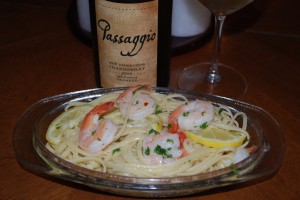
Passaggio 2009 Unoaked Chardonnay with Shrimp Scampi

Passaggio 2009 Unoaked Chardonnay with Shrimp Scampi

Philosophers will debate endlessly whether food enhances wine, or wine enhances food. Frankly, I don’t care which enhances the other, I just know the two together are worthy of many words. My focus this year is definitely on the best food and wine pairings I can create, usually within a reasonable budget and amount of time. When Robin, my better half, decided to make Ina Garten’s Shrimp Scampi recipe from her Food Network selections, I knew just the wine in the cellar to pair with this simple, but delicious meal. I’ve held on to a bottle of Passaggio 2009 Unoaked Chardonnay for several weeks, a sample from winemaker Cynthia Cosco, and was excited to serve it up! Was this $16 white wine palatable, and did it work with the recipe?

The first answer is of course it was palatable, as I rarely share bad wines with the world.  Cynthia’s philosophy at Passaggio is quite simple, Follow Your Passion, and that clearly shows in her wines. Currently Passaggio’s passion extends to the Unoaked Chardonnay, and a Pinot Grigio that I’ll be tasting later in the week. There’s insider information that perhaps we’ll see a Passaggio Rose in the future. Yum! Cynthia sources her grapes for the Chardonnay from Lodi, California, and uses the Crushpad custom wine making facility to work her magic!

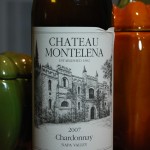
In making the Chardonnay, Cynthia chose to veer away from the “typical” oaky, buttery chardonnay we see out of many California wineries, and let the fruit express itself, rather than the wood. Therefore, the wine is fermented in stainless steel, rather than in oak, and it does not go through malolactic fermentation. “Malo” will provide the heavier, buttery mouth feel that you find in some Chardonnay wines, such as Chateau Montelena of Bottleshock fame. To get a bit of a heavier mouthfeel, Cynthia stirred the wine, which was aging sur lie for six months, every other week. Aging sur lie, or aging on lees, means that the wine stays in the same tank or barrel with the yeast that helped ferment the wine. Often this provides a bit of richness and complexity to the wine, which was very noticeable in the Passaggio chardonnay.

Passaggio Unoaked Chardonnay 2009

Passaggio Unoaked Chardonnay 2009

Right out of the bottle, the nose was a little buttered popcorn with pears, and the palate was crisp, with tropical fruits and a little spice, all of which took me by surprise. Usually spice comes from the oak, not the chardonnay, and this was unoaked, right? RIGHT!  After about 5 or 10 minutes of breathing, the nose opened up to be a lot less butter popcorn and a lot more pear and fresh fruits. The palate also changed, with a very nice tropical pineapple and pear flavor, with no spice or butter in sight, or taste. Many wines can really benefit from a little air, or breathing. I already went to the “Geek Side” with Sur Lie, so just trust me on this one. Opening the bottle, pour a quarter of a glass, and let oxygen get into the bottle and glass for 5 or 10 minutes for a fabulous glass of wine.

So I’ve told you that the wine rocked my socks, but what about the food and wine pairing? Well, first of all, Ina makes great food, so you know the meal on it’s own was going to be amazing. Easy to make, with fresh flavors of garlic and lemon that enhance the flavor of the shrimp, not mask it. The pasta was al dente and not over sauced, making it a participant of the meal, and not a casualty. We changed the recipe and omitted the red pepper flakes so that the fresh flavors stood out more, and not the heat. However, I’m tempted to make this recipe this weekend with the red pepper flakes, and see how it goes. While I’ve linked to the recipe above, I’ll post it here (without permission, I’m a rebel, huh) for your convenience. Please, Food Network, don’t be mad!

Shrimp Scampi from Ina Garten's recipe

Shrimp Scampi from Ina Garten’s recipe

The pairing was, of course, spectacular. Chardonnay and shrimp is usually a fool proof food and wine pairing. However, the tropical flavors of the Passaggio Unoaked Chardonnay complimented the lemony zip of the shrimp scampi so wonderfully, each mouthful beckoned another sip, and each sip, another mouthful. The Passaggio Unoaked Chardonnay is a great wine for $16, and paired with this dish that will run you about $15 to serve 3 or 4 people, you’ve got a great meal for about $30.

A few other wine writers have tasted and shared their thoughts on the Passaggio Unoaked Chardonnay. Check out what Frank Loves Wine and The Iowa Wino had to say. I’d love to hear what YOU have to say! Leave a comment below about Chardonnay, Passaggio, what food you’d like me to pair and post, or what you had for lunch! I don’t care, just leave a comment!

Linguine with Shrimp Scampi by The Barefoot Contessa, Ina Garten from Food Network

Ingredients:

Vegetable oil
1 tablespoon kosher salt plus 1 1/2 teaspoons
3/4 pound linguine
3 tablespoons unsalted butter
2 1/2 tablespoons good olive oil
1 1/2 tablespoons minced garlic (4 cloves)
1 pound large shrimp (about 16 shrimp), peeled and deveined
1/4 teaspoon freshly ground black pepper
1/3 cup chopped fresh parsley leaves
1/2 lemon, zest grated
1/4 cup freshly squeezed lemon juice (2 lemons)
1/4 lemon, thinly sliced in half-rounds
1/8 teaspoon hot red pepper flakes (we skipped, but give it a go!)
Directions

Drizzle some oil in a large pot of boiling salted water, add 1 tablespoon of salt and the linguine, and cook for 7 to 10 minutes, or according to the directions on the package.

Meanwhile, in another large (12-inch), heavy-bottomed pan, melt the butter and olive oil over medium-low heat. Add the garlic. Saute for 1 minute. Be careful, the garlic burns easily! Add the shrimp, 1 1/2 teaspoons of salt, and the pepper and saute until the shrimp have just turned pink, about 5 minutes, stirring often. Remove from the heat, add the parsley, lemon zest, lemon juice, lemon slices, and red pepper flakes. Toss to combine.

When the pasta is done, drain the cooked linguine and then put it back in the pot. Immediately add the shrimp and sauce, toss well, and serve.

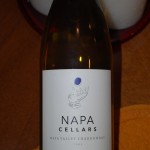
Pairing Napa Cellars 2009 Chardonnay with Sauteed Shrimp

Napa Cellars 2009 Chardonnay

Napa Cellars 2009 Chardonnay

I’ve always been of the opinion that two things enhance the enjoyment of drinking wine, food and friends. The mission of my writing has always been to make wine more approachable, which includes helping my friends make well informed choices in their wine selections. When my twitter friend Richard Auffrey issued a call to action for wine writers to step up our game in 2011, my response was to post more relevant food and wine pairing to help you have a good time with wine.

A tweet from the folks at Food Network inspired a mid-week quick and easy meal of sauteed shrimp.  Their idea was to saute shrimp with garlic, and deglaze the pan with Champagne.  A simple enough idea, and one that included wine or Champagne, so I was quite excited.  I knew I had a host of wines to pair with such a dish, so I prepared the following recipe:

1 pound medium shrimp, peeled and deveined
4 medium cloves of garlic, chopped
2-3 tablespoons of extra virgin olive oil
1/2 to 1 cup of Sparkling wine (you can use a California Sparkling Wine or Italian Prosecco, Cava, or a Champagne)

In a large saute pan, I heated the olive oil on medium for about 4 minutes, then added the chopped garlic to saute for about 3 to 5 minutes, stirring the entire time.  I then added the cleaned shrimp, and sauteed them until pink, about 5 minutes. You want to ensure you don’t over cook the shrimp, or they’re rubbery. Cut one open and ensure the inside is pink and no longer the translucent white. Once they’re done, take them out of the pan and put them in a serving dish. Pour the sparkling wine into the pan, and deglaze, ensuring the crusty bits come off the bottom of the pan.  Stir for about three minutes, as the wine will reduce and thicken, mixing nicely with the flavors in the pan.  Pour over the shrimp, serve over pasta, rice or on it’s own, and pop a cork.

This dish could have gone with quite a few wine options, but I selected a bottle of Napa Cellars 2009 Chardonnay, which cost around $24. After giving the bottle a few minutes to open and breathe, the bouquet of ripe pears pops out of the glass, followed by a little creme brulee.  There are even scents of sweet white floral mixed in with those pears, and it’s a great nose. The palate is light to medium body, and is a good mix of buttery and crisp. Some of the wine goes through malolactic fermentation, which will produce the buttery, heavy mouth feel in a white wine like chardonnay. However since not all of the wine went through “malo”, it retains some of the crispness chardonnay can show. There is good fruit, apples and pears,  and spice right up front, with some nice toast, but not over done as you can find in “Over Oaked” chardonnay. There’s a lingering smokey spice flavor on the finish, but it’s warm and inviting, not overbearing.

There are some great examples of Napa chardonnay on the market, and I truly believe that this Napa Cellars 2009 Chardonny is one of them. Winemaker Joe Shirley, head winemaker since 2007, is a California native who’s doing some nice things at Napa Cellars. He worked at Sonoma Cutrer in the late 90′s, which almost typifies buttery California Chardonnay. At $24 for the Napa Cellars 2009 Chardonnay, it’s quite nice when compared to chardonnay in the same price range, such as Paraiso’s Chardonnay, which I also enjoy and have brought to various TV segments to recommend.

Don’t think that chardonnay only pairs with foods prepared with Shrimp. I love chardonnay with chicken, from baked to fried to roasted. As a matter of fact, this Napa Cellars Chardonnay sample came with a recipe for Chicken Saffron Brochettes with Spanish Chorizo. YUM, we’ll have to make that and discuss in the future! And of course, lobster, whether boiled and dipped in drawn butter, or in a lobster roll, is a natural pair for most California chardonnay. What is your favorite food and wine pairing with chardonnay? Leave a comment below, I’m dying to know.

A few more Thanksgiving wine options

Got Turkey?

What do I pair with?

With Thanksgiving approaching, you may be scrambling to find some wines to go with everything you serve.  As I’ve said before, there’s no one wine that will pair with everything you serve, and more importantly, drink what you like on Thanksgiving. That being said, if you rather focus on your family, friends and the meal itself, you can leave the wine selections to me. I’ll offer two more options that I recently tasted as part of a sample review from Frederick Wildman’s various offerings.  I’ll also point you to some wines I’ve recommended in the past, because they’re tried and true.

Dr Loosen Erdener Treppchen Riesling Spatlese 2007

Dr Loosen Erdener Treppchen Riesling Spatlese 2007

I’ve always thought that Riesling is a great grape for the holidays.  I mentioned a few different producers in the past, though I do always think that a Dr Loosen wine makes a great showing.  From the $12 Dr Loosen Dr L to the $25 Dr Loosen Erdener Treppchen, they offer great flavors alone, or paired with food. I’ve enjoyed them with ham or other pork dishes, as well as poultry. Many of my family members love the easy drinking, fruit forwardness of the Dr L, especially with it’s crisp, clean finish.  It always makes an appearance on our holiday table.

El Coto Rioja Rose

El Coto Rioja Rose

If you are looking for an easy drinking “welcome” wine, look no further than El Coto Rioja Rosado 2009. This rose is a blend of 50% Tempranillo and 50% Garnacha, and is 100% great. With a fresh fruity nose of bright, brilliant strawberries, this $12 wine will be greatly appreciated by your guests as they settle in for the day. The nose carries through to the palate, with fresh strawberries and raspberries and mild acitity, making this wine a fun, light to medium bodied wine to sip on, or pair with appetizers and cheese.

Christian Moreau Chablis

Christian Moreau Chablis

Another interesting wine sample from Frederick Wildman was the Domaine Christian Moreau 2008 Chablis, which retails for about $24. I love Chablis for it’s crisp, pure expression of Chardonnay, and the opportunity to have my “I hate Chardonnay” friends eat those words, or swallow them.  There’s a crisp, steely nose with apple laced scents, which is followed by a medium bodied crisp palate of tart apple. There’s a bit of a citrus note, attributed to the firm acidity, but it’s a nice refreshing wine. This wine will certainly drink well with any fish or poultry dishes on your holiday table.

Ponzi Pinot Noir

Ponzi Pinot Noir

If you’re a fan of red wines, don’t forget a bottle of Pinot Noir. Whether it’s from California, Oregon, or Burgundy, a glass of Pinot Noir will go well with much of your holiday fare. It can be light enough to pair with your turkey, and full bodied enough to pair with any beef dishes. We had a bottle of Oregon’s Ponzi 2008 Tavola Pinot Noir with lunch last week, and it immediately made my “Thanksgiving Wine” recommendation list.  Great fruit mixed with an earthy smokiness that everyone at the table enjoyed. It paired with everything from croque monsieur to a french dip to a salad with grilled chicken. We’ll probably be serving a bottle of J Christopher Pinot Noir, also from Oregon, and a bottle of Hahn Estate SLH Pinot Noir, since we have them both stocked in our cellar.

By no means should you reserve these wines for holidays alone. And of course, this is not a definitive list of wines you can serve on Thanksgiving. Make a statement with dessert wines, whether a Sauternes or a Port. They will satisfy your sweet tooth without making you feel that you ate more than you should have. I’ll have some recommendations in the next few days, and add them for your sipping pleasure.

I’d love to know what you are serving for Thanksgiving! Do you have any annual traditions? Share them in the comments below!

Page 2 of 6«123456»