
Archives for

Beaujolais

Talking Turkey – and Wine

Wine Ideas For Thanksgiving

Wine Ideas For Thanksgiving

With the cornucopia of food on your Thanksgiving table, finding one wine that works with everything being served is impossible. As I mentioned in my previous Thanksgiving wine article, drink what you like is a popular response to “what’s the best wine for Thanksgiving”. However, I have some additional recommendations that will work not only with a typical holiday meal, but any food or occasion. In the video that follows, I chat with CBS12 anchors Suzanne Boyd and Eric Roby about three wines, with more detail on each below the video.

Gewurzstraminer Hugel 2009

Gewurzstraminer Hugel 2009

Gewürztraminer is a grape often recommended on Thanksgiving. The palate is typically light to medium bodied, and the flavors work well with not only Turkey, but much of the side dishes you’ll find at a holiday feast. While grown around the world, I prefer gewurztraminer from the Alsace, such as the Hugel 2009 Gewürztraminer. For about $15, this white wine offers fantastic value. What I love about this wine is its light palate, dominated by white floral notes such as jasmine and honeysuckle. The finish brings a nice spice flavor, and leaves soft peach and apricot notes that linger. However, the acidity is firm, lending a tiny citrus note to the palate, and that works perfect with turkey, yams, and even fresh fruit. It is important to note that this wine will change as it warms and gets air while in your glass. You’ll notice the flavors more prominent and it becomes a little less crisp and a little fuller bodied. I recommend popping the cork 5 or 10 minutes before you’re ready to eat, and letting it breathe just a little bit.

Rodney Strong 2009 Russian River Valley Pinot Noir

Rodney Strong 2009 Russian River Valley Pinot Noir

Pinot noir makes an appearance twice in my holiday recommendations, as I feel it’s a versatile, food friendly wine. Rodney Strong 2009 Russian River Pinot Noir delivers a stunning red wine for only $20. A beautiful, light garnet color in the glass, this is a wine that wasn’t over extracted or over concentrated. With fruit from estate vineyards, meaning the fruit is from Rodney Strong Vineyards or from vineyards they control, manage the growing practices, and have long term contracts with, this Pinot is every bit old world in style as it is new. There is big flavor in the bottle, with tons of raspberry and dried strawberry. However, the palate is a mix of California and Burgundy, as it delivers the right amount of new world fruit perfectly balanced with old world earth and tobacco. This pinot noir will benefit from some breathing time, so pull the cork and let the bottle sit for about 20 minutes before serving, or decant and let aerate for 10 minutes. This will allow the wine to open a little, allow you to more fully enjoy the wine. While I was quite happy sipping this on it’s own, look for this wine to pair with almost any meat you put on your thanksgiving table. From turkey to pork to beef, this Pinot rocks them all.

Potel Aviron 2009 Julienas Cru Beaujolais

Potel Aviron 2009 Julienas Cru Beaujolais

Finally, though I have absolutely no love for Beaujolais Nouveau, I’m a fan of wines from many of the 10 Cru Beaujolais areas. These areas are designated due to their superior conditions for growing grapes in comparison to other areas within Beaujolais. While both are made from the gamay grape, Cru Beaujolais wines are more structured, typically aged before release, and are nothing like their bubblegum Nouveau wine cousins. Each of the 10 Crus brings something different to the wines, and this wine from Julienas is no exception. The wines of this area tend to have a rich, spicy character coupled with fruity qualities of gamay. The palate of the  Potel Aviron 2009 Julienas had notes of dried dark cherry, with an old world, earthy component as well. This wine definitely needed to decant for about an hour before serving, and could age for a year or two and still show nicely. For fans of old world wines, created to pair with a meal, this $25 wine will be a treat.

Dr  Loosen 2006 BA

Dr Loosen 2006 BA

At the end of the TV segment, Eric and Suzanne ask about dessert wines. I’m a big fan of port, but believe beerenauslese riesling is a better pick for Thanksgiving. This riesling is a little lighter than a port, and after a big meal, is the right wine for that touch of sweetness you may crave. A lover of Dr Loosen wines, their 2006 Beerenauslese will offer the rich, sweet honeyed apricots and nectarine flavors that end the evening perfectly. It will pair with many of the fruit pie desserts served during Thanksgiving, or be perfect on it’s own. This high quality, low quantity wine will fetch about $25 for a 187ml bottle or $50 for a 375ml bottle, which is half the size of a “normal” wine bottle. There are many late harvest riesling option available at a lower price, but they won’t necessarily be the same the quality of Dr Loosen’s BA.

I look forward to hearing what wines you pick for your Thanksgiving day meal. And no matter what you drink, I hope you have a happy Thanksgiving!


-These wines were provided as media samples for review. However, my opinions are my own, and not influenced by samples or the people who provide them -

WBW68 Domaine Ruet Chiroubles – Cru Beaujolais

Domaine Ruet Chiroubles - Cru Beaujolais

Domaine Ruet Chiroubles - Cru Beaujolais

I had mixed emotions when I saw Frank from Drink What You Like announce that Wine Blogging Wednesday 68′s topic would be “Got Gamay”! While I am a huge fan of Wine Blogging Wednesday, an idea started in 2004 by Lenn Thompson from New York Cork Report to help bring wine bloggers together on one united topic monthly, Gamay really is not my favorite grape. However, I approached the topic from an educational standpoint, hoping to help at least one person understand not only what wines Gamay will produce, but help them identify where it can come from and what to expect. To do so, I popped open a bottle of Cru Beaujolais from Domaine Ruet ($17), and did this short wine tasting and discussion.

As I pointed out in my Gamay discussion, the grape is most commonly recognized when it comes from Beaujolais, an AOC or appellation in France. There are several different areas within Beaujolais that produce wines of varying quality. The first level,  Beaujolais, produces the most Gamay wine, most which is bottled as Beaujolais Nouveau. Beaujolais Nouveau is that marketing ploy developed in the 1980s, where young Gamay is bottled and distributed quickly as a light, overy fruity, almost fake wine. I’ve not tried the past three vintage of BN, and really don’t feel like I’m missing out. Beaujolais usually cost around $12. That brings us to the second tier of vineyards, or Beaujolais-Villages. That isn’t pronunced Village like like Village People. It’s Vih-lah-zges, Anyway, these wines are still light and fruity, but typically a tad more intense and structured. You can find these for about $15. Finally,  the third and highest tier of Beaujolais, Cru Beaujolais, which may cost around $17.

Cru Beaujolais, which is made up of 10 distinct areas as discussed in that other post, and produces a but more refined and intense wine. While Beaujolais is is typically consumed within the year after bottling, and Beaujolais-Villages perhaps within 2 years, Cru Beaujolais often needs a year of aging to be approachable, and can age for 5 to 10 years, depending on the vintage. That brings us to the topic of the post, the Cru Beaujolais from Domaine Ruet – Chiroubles.

The video above touches on the 84 year old Ruet Family estate, which is located on the remarkable terroir of Voujoin in Cercie-en-Beaujolais, at the foot of Mount Brouilly. They produce wines from 6 of the 12 Beaojolais appellations, Brouilly, Morgon, Côte de Brouilly, Régnié,Beaujolais and Beaujolais Villages. I’ll leave you to the short video for tasting notes on the wine. I will say two followup comments – it was very nice with the roast chicken, though I found it a tad more dry and tannic than I expected. Finally, it opened up nicely over night, showing a bit more cherry on the nose, and on the palate. I would probably grab another bottle of this and give it a bit to decant, and see how it compares to the pop-and-pour I did in the video.

In retrospect, I owe Frank a big thank you for his Wine Blogging Wednesday 68 topic. While I am not much fonder of Gamay, I enjoyed reviewing, discussing, and trying this wine. It’s piqued my curiosity to try their other Cru’s, and perhaps a few other Beaujolais in comparison. It’s been quite a while, perhaps two years, since I seriously considered Gamay.  Well done Frank!

Wine 101 – Introduction to Gamay

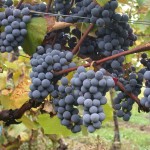
Gamay Grapes

Gamay Grapes

The Gamay grape has a history dating back to approximately 1360, and it is thought to have first appeared in the Village of Gamay, it’s namesake. It’s nearly synonymous with Beaujolais, the AOC (Appellation d’Origine Contrôlée) in which it is most abundantly produced. What does all that mean? Well, The short two minute video here tries to explain a little bit about the grape, the styles of wine you can expect from Gamay grapes, and the main geography it is produced in.

There are several regions, or appellations, of Beaujolais, and each produces a different style and quality of wine made from Gamay grapes. The Beaujolais AOC is considered the first quality tier, and is likely what you think of when you have Beaujolais Nouveau each November. Beaujolais wines are meant to drink soon after bottling, and are typically fruit forward and easy drinking. They also, perhaps, have a bad reputation of being too simple and barely a step up from sweetened fruit juice. While masterful marketing in the 1980s has made Beaujolais Nouveau a wine people anticipate each year, it has also perhaps hurt the reputation of a grape that could produce great wines.

The next step up in quality is Beaujolais-Villages (Vill-ah-zche). While the wines produced here are also meant to be consumed young, like Beaujolais, they typically have lower yields, or smaller crops, which in turn produce more intense grapes and a smaller amount of more intense wines. There is not, typically, a tremendous price difference between wines from Beaujolais vineyards versus Beaujolais-Villages, and trying wines from each area will help understand the differences and similarities.

Finally, there are the ten Cru Beaujolais regions, each with it’s own characteristics that are imparted upon the wine, and can be broken into three categories. The Cru’s that make the lightest style of wine includes Brouilly, the largest Cru, Regnie, which was upgraded from a Beajolais-Villages are in 1988, and Chiroubles. The Cru Beaujolais producing medium bodied wine, which some experts recommend at least a year of bottle aging before approaching, include Cote de Brouilly, Fleuire, and Saint-Amour. Finally, the four Cru’s that typically produce the fullest bodied wines are Chenas, Juliénas, Morgon, and Moulin-a-Vent.It’s difficult to summarize each of the Cru’s, so I’ll expand on them in future posts.

Now you have an opportunity to add your thoughts! While I mentioned cheeses like Munster, Emmental, and Brie, as well as chicken or turkey, I barely covered foods that pair well with Gamay, or Beaujolais. What are some of your favorite food and Gamay wine pairings? After watching the video and reading the post, leave a comment below. I’m curious your take on Gamay, Beaujolais, and related topics.